Launch offer — valid today only

📄 Digital book in PDF · read it on your phone or print it

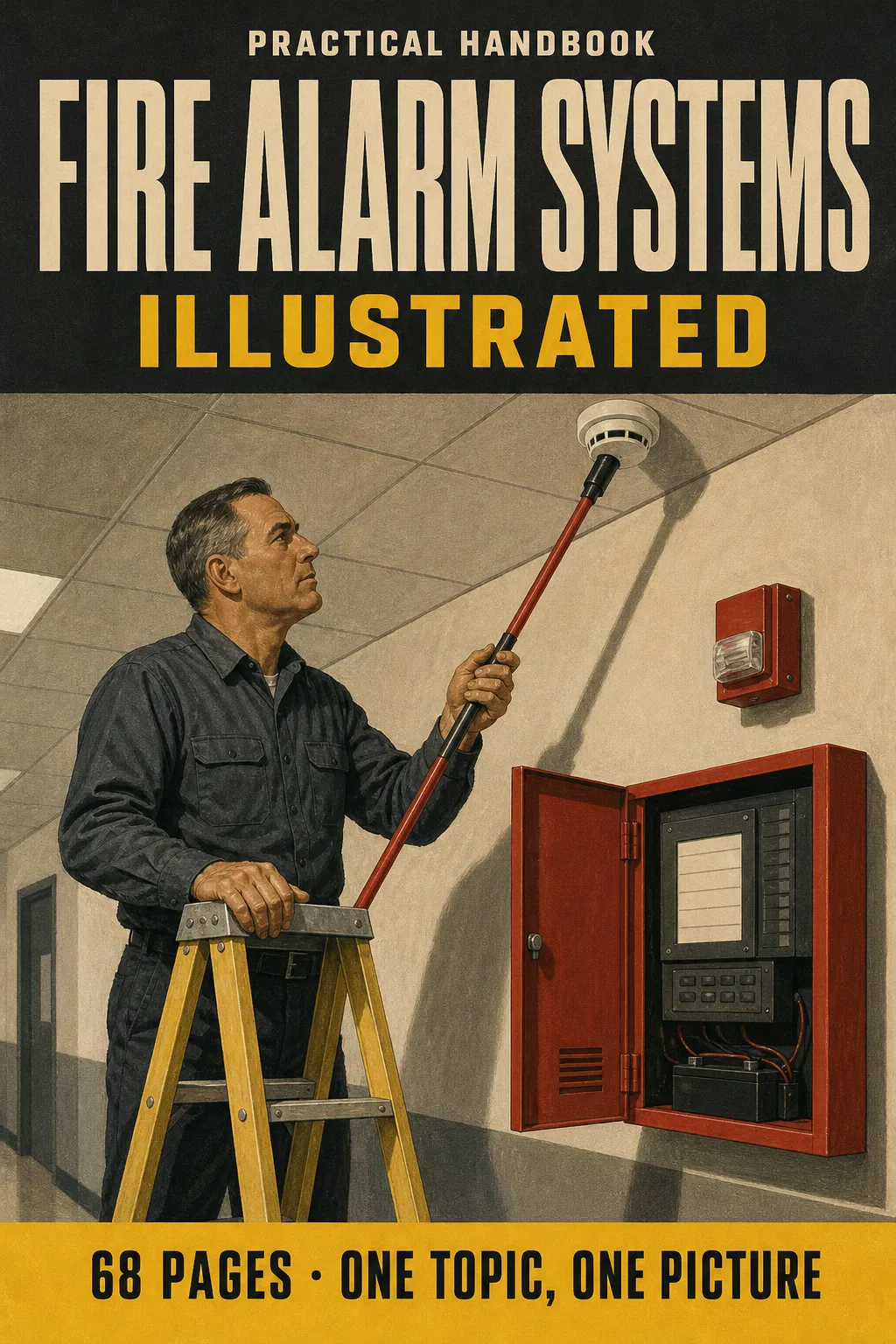
NICET Fire Alarm Levels I and II, Fully Illustrated One Topic per Page, Always in the Same Order: From the Riser to the Battery Calc

Photoelectric vs. ionization, Class A and Class B, IDC, NAC and SLC, alarm vs. supervisory vs. trouble, strobes and candela, battery calcs, voltage drop and testing frequencies. Every topic gets its own page: the drawing first, then what you need to remember. 68 illustrated pages.

START STUDYING THIS WAY

🔒 Secure checkout · PDF by email · 30-day guarantee

Every topic, its own pageEach device and circuit drawn, with the explanation right beside it
68 illustrated pages9 parts, from the NICET exam basics to exam day at Pearson VUE
Up-to-date sourcesNICET FAS outlines, NFPA 72 (2022) and NEC Article 760
PDF by emailFormat

Look Inside the Book

Every page has one big drawing and a box with the rules and numbers you need to know:

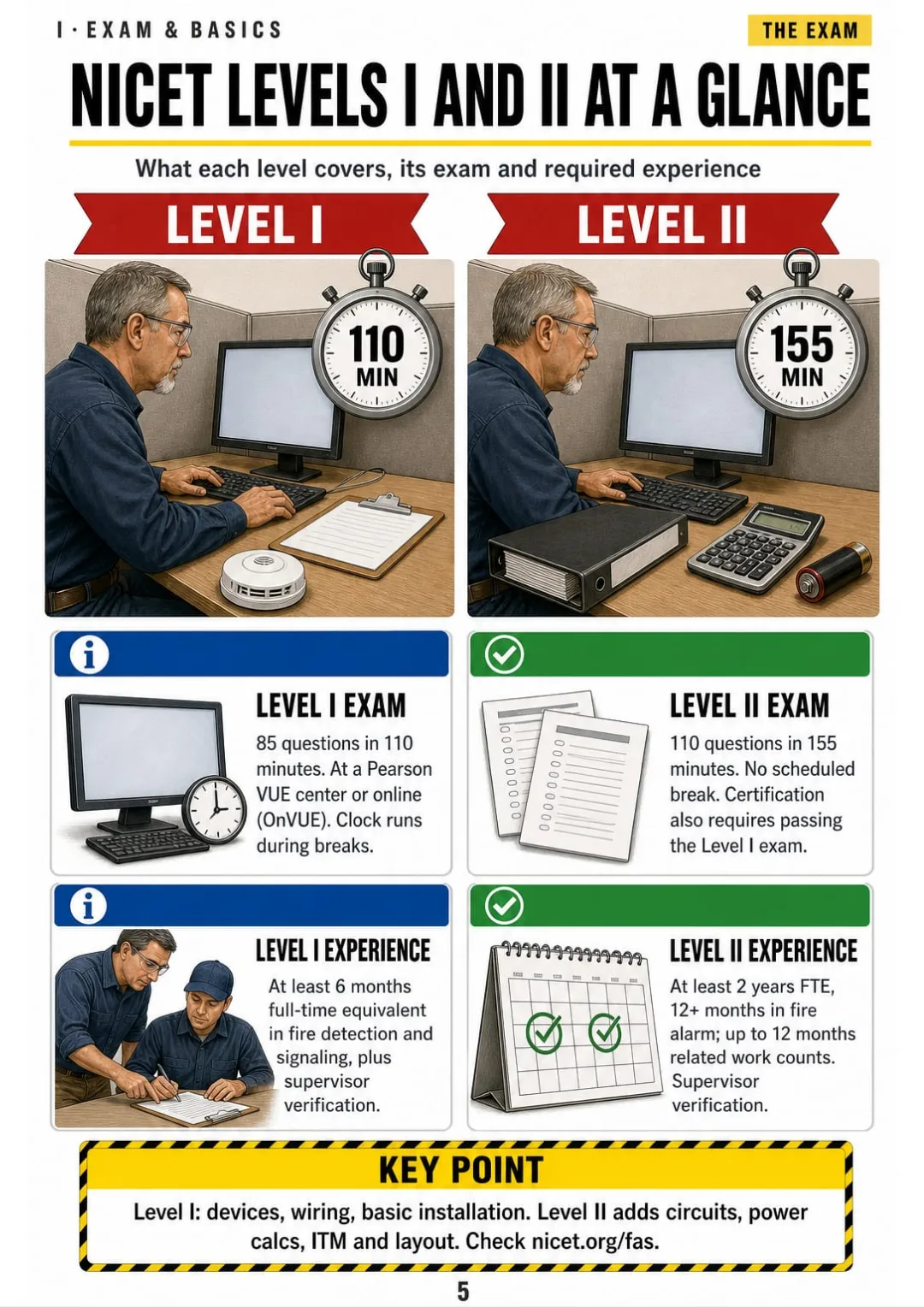
Level I: 85 questions, 110 min · Level II: 110 questions, 155 min (per NICET at the time of this edition)
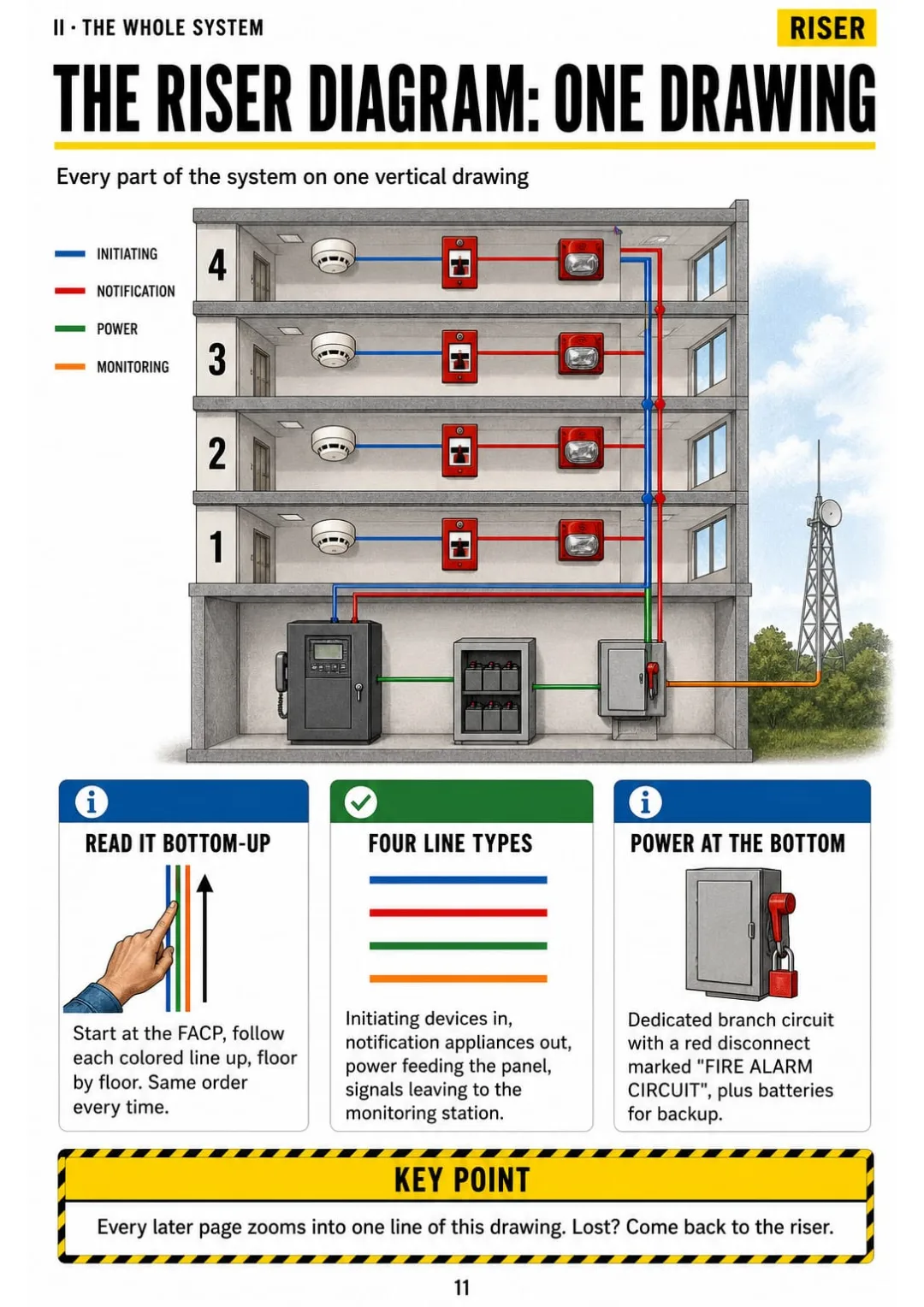
Four colors, one riser: initiating, notification, power and monitoring from the FACP up.
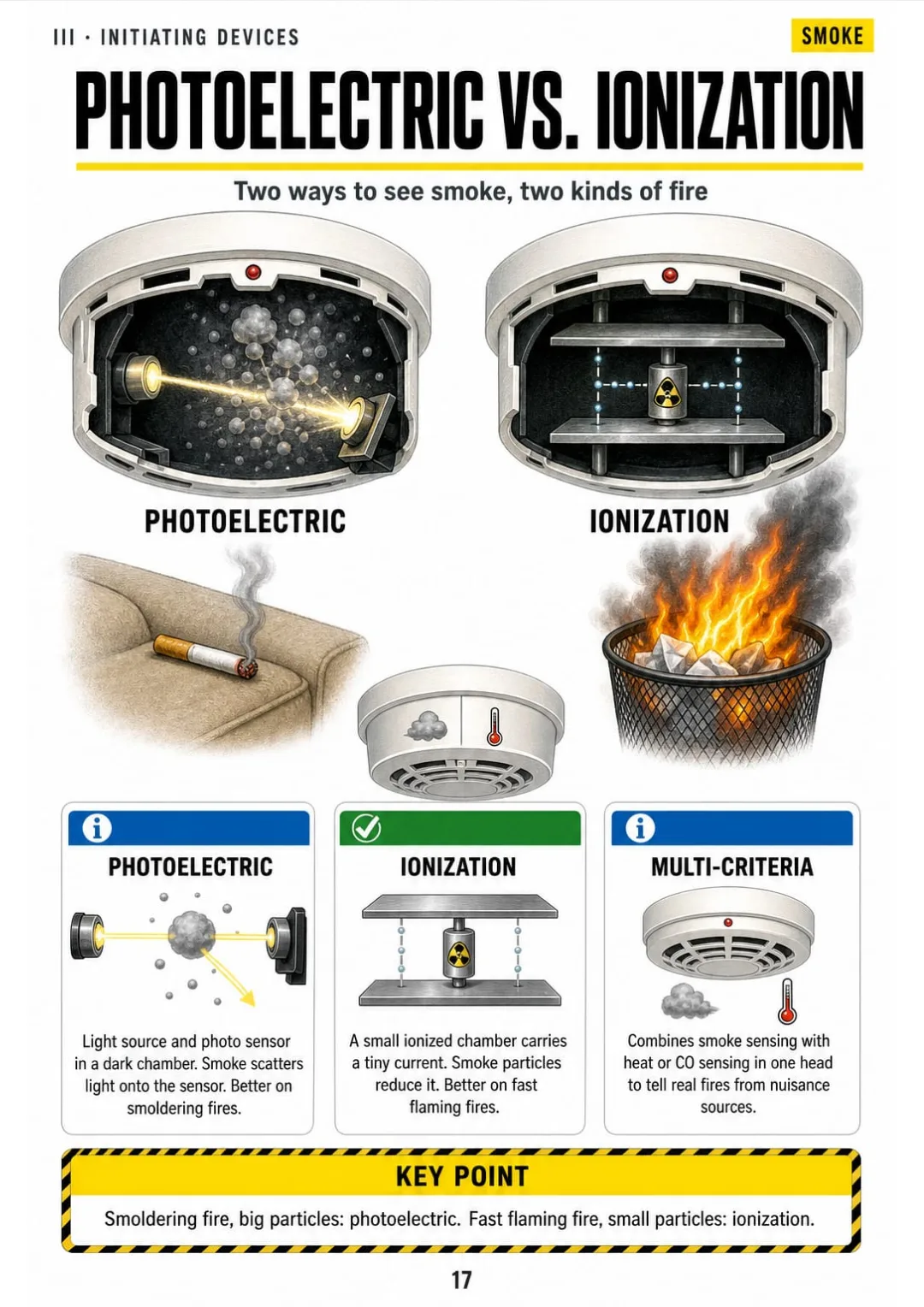
Photoelectric = light scattering, smoldering fires · Ionization = ion current, flaming fires
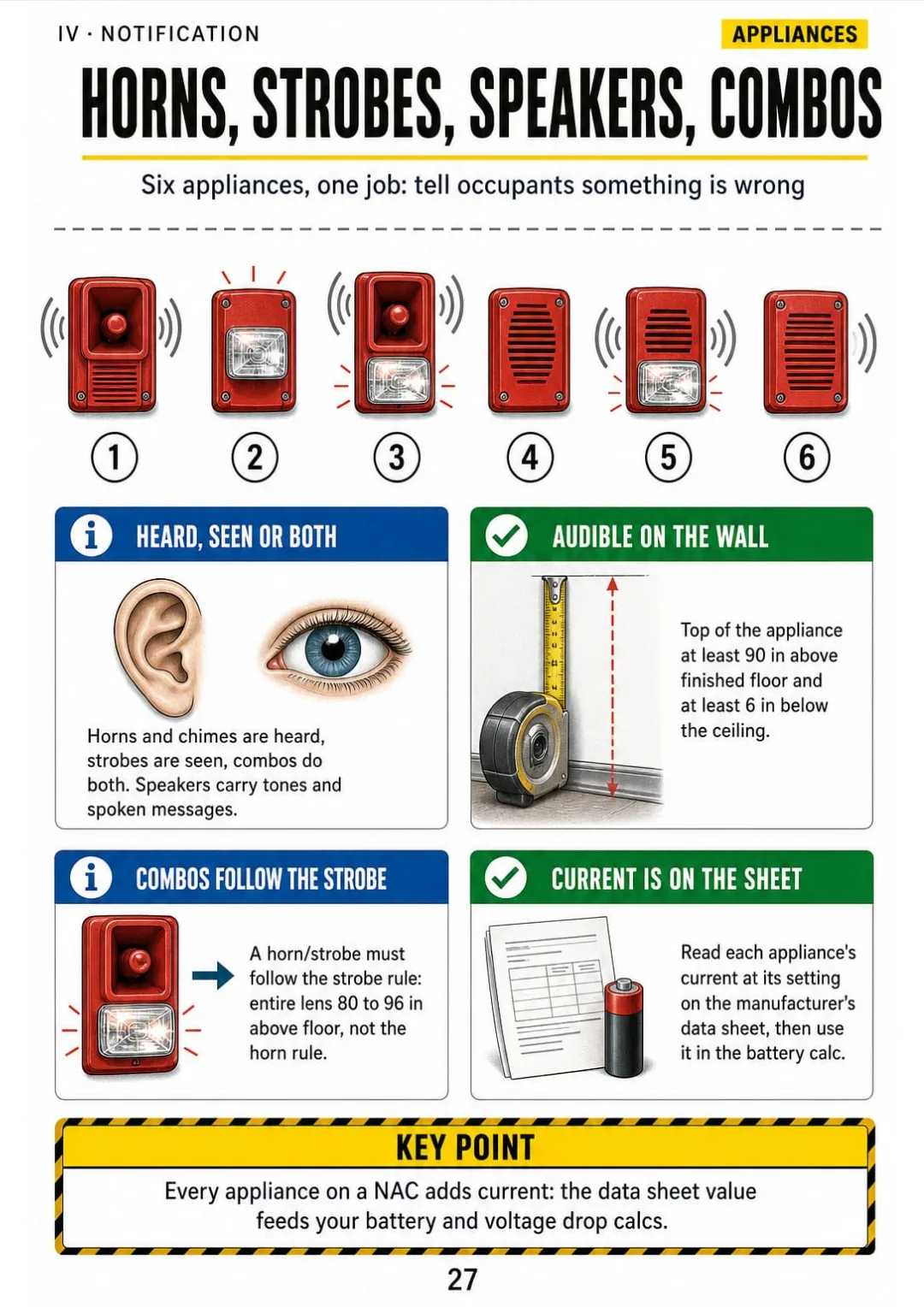
Audible appliances: top at least 90 in above the floor and 6 in below the ceiling (NFPA 72-2022, Ch. 18).
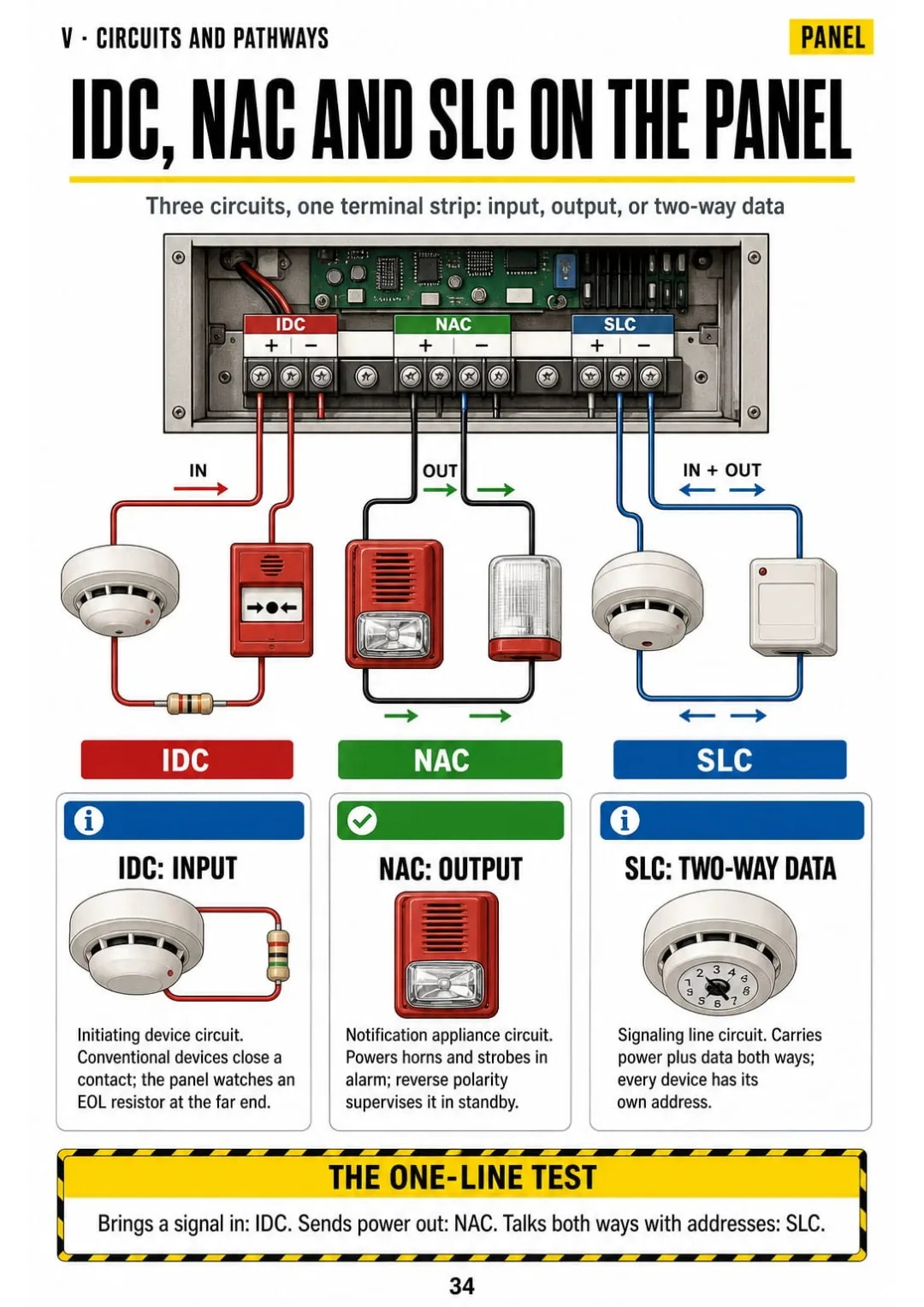
IDC brings signals in, NAC sends power out, SLC talks both ways with addresses.
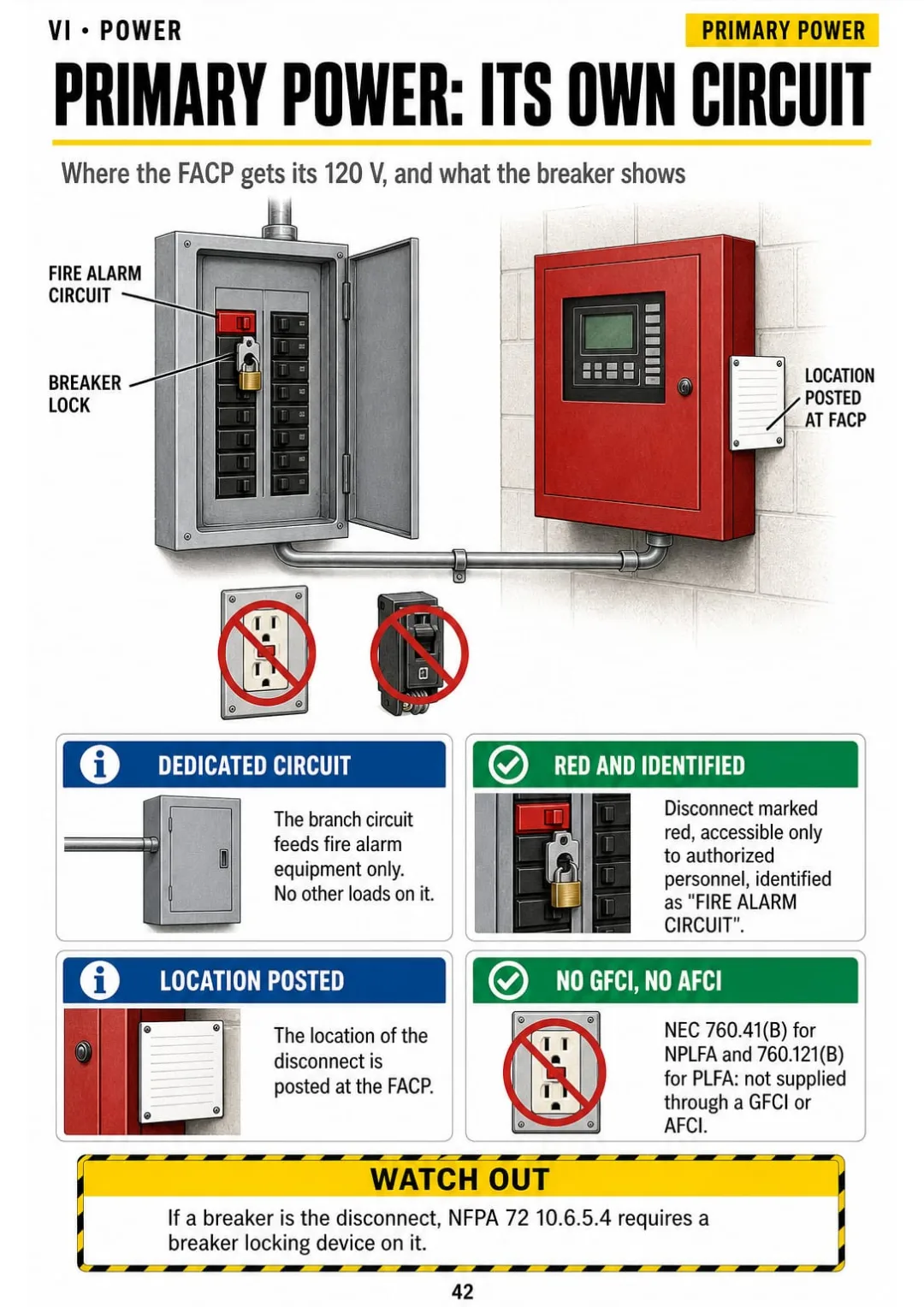
Dedicated branch circuit, red disconnect marked FIRE ALARM CIRCUIT with a breaker lock, location posted at the FACP (NFPA 72-2022, NEC 760).
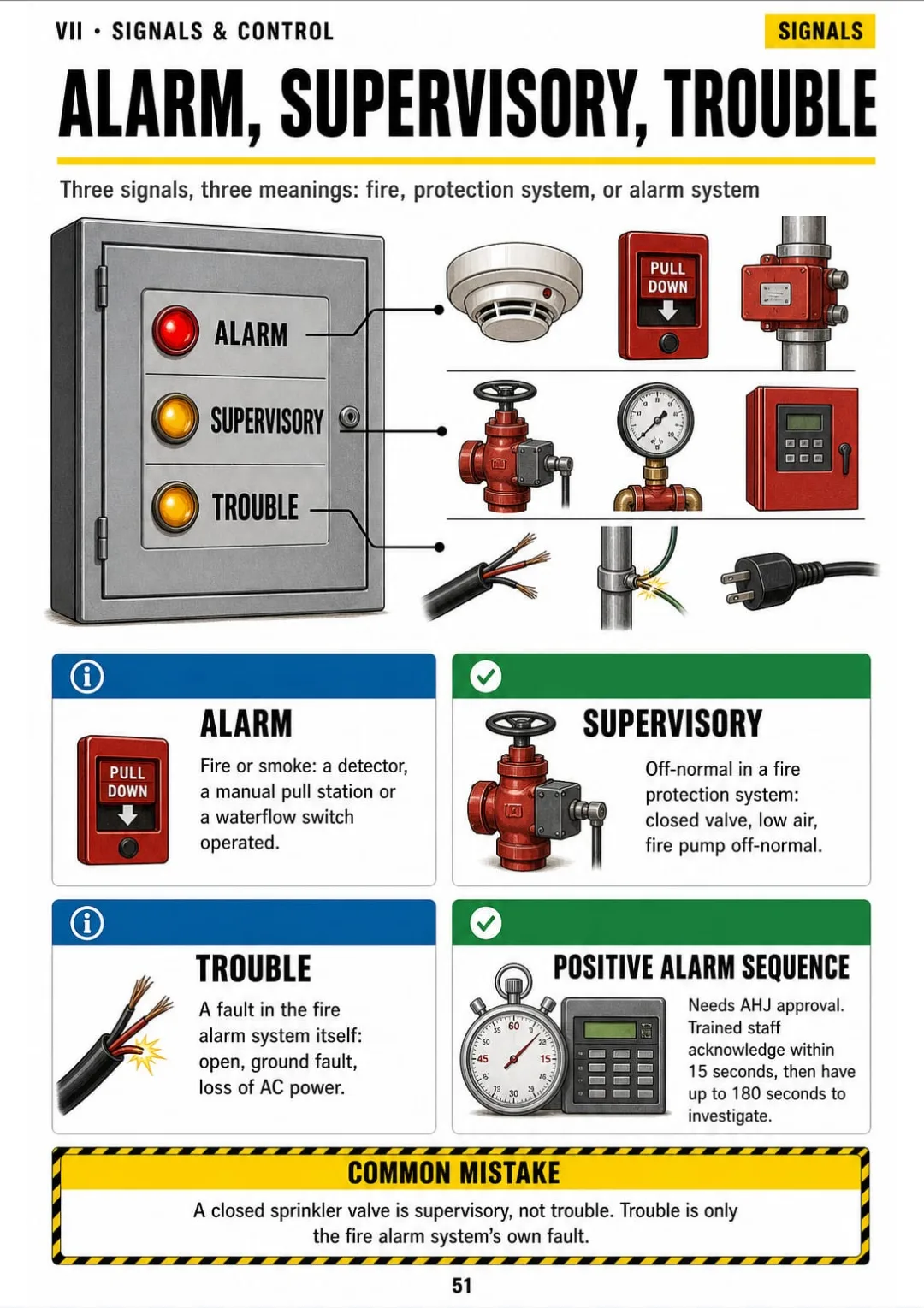
Alarm = fire, supervisory = protection system off-normal, trouble = fault in the alarm system itself.
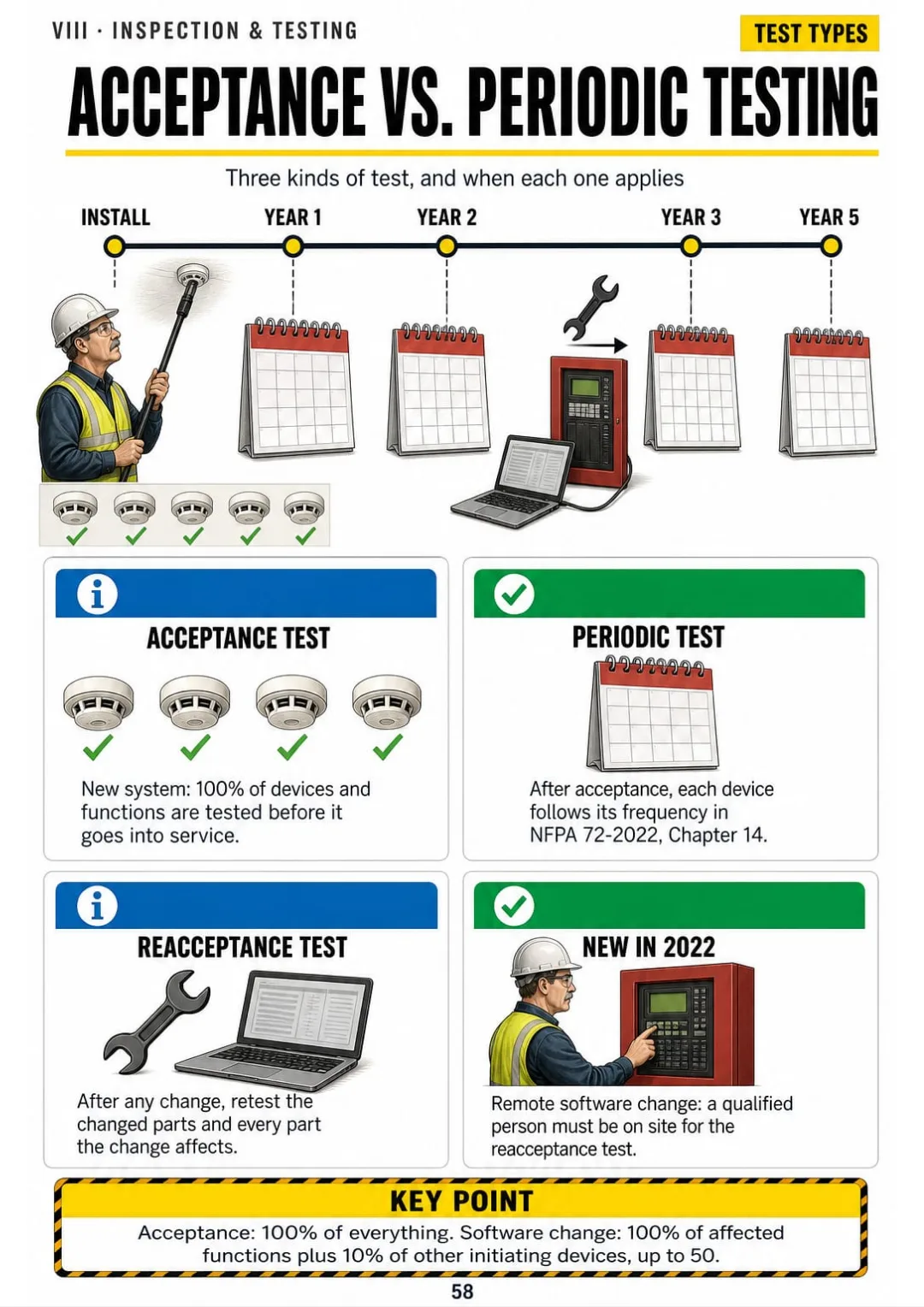
Acceptance testing covers 100% of devices; reacceptance covers what changed and what it affects.

Swipe to see more →

These are real pages from the book. The table of contents is the full one: 9 parts and 64 topics.

The Problem Isn't You. It's How It Was Explained to You.

You're on a practice question: a smoldering fire in a storage room, which smoke detector responds first? You've hung hundreds of smoke heads, and you still freeze on the answer.

The textbook covers it in paragraphs: chambers, particle size, response characteristics. Two technologies buried in the same block of text, and by the next night they've blurred together.

Photoelectric = light scattering, smoldering fires · Ionization = ion current, flaming fires

In this book it's one page. Photoelectric on one side: light scattering, smoldering fires. Ionization on the other: ion current, flaming fires. Side by side, drawn and labeled.

Same with Class A and Class B, IDC, NAC and SLC, alarm vs. supervisory vs. trouble and the battery calc: each one has its own page.

You see why it works, and you recognize the answer instead of rereading the paragraph.

COMPARE FOR YOURSELF

Same Topic, Two Ways to Study It

THIS
  • The textbook: line after line
  • Circuits and devices explained only in words
  • You walk into the exam with doubts
A fire alarm system riser diagram is a schematic representation depicting the vertical interconnection of system components between the fire alarm control panel and the field devices located on each floor of the protected premises. The diagram shall indicate initiating device circuits, notification appliance circuits and signaling line circuits, together with the associated conductor quantities, the location of power supplies and the means of transmission to the supervising station, so that the configuration of the installation may be evaluated by the authority having jurisdiction prior to acceptance.
FOR THIS
  • The whole system in one riser drawing
  • The key rules in a box
  • You see it and you get it
Four colors, one riser: initiating, notification, power and monitoring from the FACP up.
CONTENTS

Take a Look at the 9 Parts and 64 Topics

The exam and the basics, the whole system on one riser, initiating devices, notification appliances, circuits and pathways, power and batteries, signals and controls, inspection and testing, and exam-day review: 68 pages, all illustrated.

IThe Exam and the Basics · pp. 5-10
  1. NICET Fire Alarm Levels I and II on one page
  2. Your map of NFPA 72
  3. Who has the last word: the AHJ
  4. Ohm's law for fire alarm
  5. Series and parallel on a real circuit
  6. Wire gauge and resistance
IIThe Whole System on One Riser · pp. 11-16
  1. The riser diagram: the whole system at once
  2. The FACP and what's inside it
  3. Inputs and outputs
  4. Conventional vs. addressable
  5. Protected premises vs. supervising station
  6. Household vs. commercial
IIIInitiating Devices · pp. 17-26
  1. Photoelectric vs. ionization
  2. Smoke detector spacing on a smooth ceiling
  3. Where smoke detectors don't go
  4. Heat detectors: fixed temperature and rate-of-rise
  5. Beam and air-sampling detectors
  6. Duct smoke detectors
  7. Manual pull stations
  8. Waterflow and valve tamper switches
  9. Carbon monoxide detection in NFPA 72
  10. Monitor and control modules
IVNotification Appliances · pp. 27-33
  1. Horns, strobes, speakers and combos
  2. The temporal-3 pattern
  3. How loud: audibility rules
  4. Strobe mounting and flash rate
  5. Choosing candela for a room
  6. Voice evacuation and intelligibility
  7. Public vs. private mode
VCircuits and Pathways · pp. 34-41
  1. IDC, NAC and SLC on the panel
  2. The end-of-line resistor
  3. Class B pathways
  4. Class A pathways
  5. Class X, C, D, E and N
  6. Ground faults and short-circuit isolators
  7. Pathway survivability levels
  8. Fire alarm cable under NEC Article 760
VIPower, Batteries and Voltage Drop · pp. 42-50
  1. Primary power: the dedicated branch circuit
  2. Secondary power: what the batteries must cover
  3. Battery calc, step 1: standby current
  4. Battery calc, step 2: alarm current
  5. Battery calc, step 3: amp-hours and safety margin
  6. Voltage drop: the formula
  7. Voltage drop: a worked NAC
  8. When the voltage drop fails
  9. NAC power extenders
VIISignals, Monitoring and Emergency Control · pp. 51-57
  1. Alarm, supervisory, trouble: three signals
  2. Silence, acknowledge and reset
  3. Transmitting to the supervising station
  4. Elevator recall
  5. Elevator shunt trip
  6. Fan shutdown, door release and other controls
  7. Annunciators and zoning
VIIIInspection, Testing and Documents · pp. 58-63
  1. Acceptance test vs. periodic test
  2. Testing frequencies you need to know
  3. Testing each device the right way
  4. Battery inspection and testing
  5. Documentation: record of completion and test records
  6. Impairments and false alarms
IXReview and Exam Day · pp. 64-68
  1. The 8 most common mix-ups
  2. Numbers to have at a glance
  3. The two calcs on one page
  4. Finding answers fast in the references
  5. Exam day at Pearson VUE

One Page, One Topic, All Clear

Think of it this way:

You're on a job and the last strobe on a NAC won't flash. Your lead asks if it's a voltage drop problem, and you need the answer right there.

In the book you open the voltage drop page and see the NAC drawn from the panel to the last appliance, the formula in a box and a worked example, solved in the same steps every time.

IDC brings signals in, NAC sends power out, SLC talks both ways with addresses.

Same with Class A and Class B, alarm vs. supervisory vs. trouble, photoelectric vs. ionization, strobe mounting and the battery calc: each one on its own page.

Fire Alarm Systems Illustrated is 9 parts and 68 illustrated pages, one topic per page, and it ends with the most common mix-ups, the numbers to have at a glance and both calcs on one page.

What you see drawn, you don't have to memorize.

What's Inside Fire Alarm Systems Illustrated:

Ipp. 5-10

The Exam and the Basics

The NICET Level I and II exams on one page, a map of NFPA 72, the role of the AHJ, Ohm's law, series and parallel, wire gauge and resistance.

IIpp. 11-16

The Whole System on One Riser

The riser diagram, the FACP and what's inside it, inputs and outputs, conventional vs. addressable, protected premises vs. supervising station, household vs. commercial.

IIIpp. 17-26

Initiating Devices

Photoelectric vs. ionization, smoke detector spacing, where smoke detectors don't go, heat, beam, air-sampling and duct detectors, pull stations, waterflow and tamper switches, CO detection, modules.

IVpp. 27-33

Notification Appliances

Horns, strobes, speakers and combos, the temporal-3 pattern, audibility, strobe mounting and flash rate, choosing candela, voice evacuation, public vs. private mode.

Vpp. 34-41

Circuits and Pathways

IDC, NAC and SLC, the end-of-line resistor, Class B, Class A and the other classes, ground faults and isolators, survivability, fire alarm cable under Article 760.

VIpp. 42-50

Power, Batteries and Voltage Drop

Primary and secondary power, the battery calc in three steps, the voltage drop formula, a worked NAC, what to do when it fails, NAC power extenders.

VIIpp. 51-57

Signals, Monitoring and Emergency Control

Alarm, supervisory and trouble, silence, acknowledge and reset, transmitting to the supervising station, elevator recall and shunt trip, fan shutdown, door release, annunciators.

VIIIpp. 58-63

Inspection, Testing and Documents

Acceptance vs. periodic testing, testing frequencies, testing each device, battery testing, records of completion, impairments and false alarms.

IXpp. 64-68

Review and Exam Day

The 8 most common mix-ups, the numbers to have at a glance, both calcs on one page, finding answers fast in the references, exam day at Pearson VUE.

At the end of the book: The 8 most common mix-ups, the numbers at a glance and both calcs on one page.
Plus: 2 Free Books

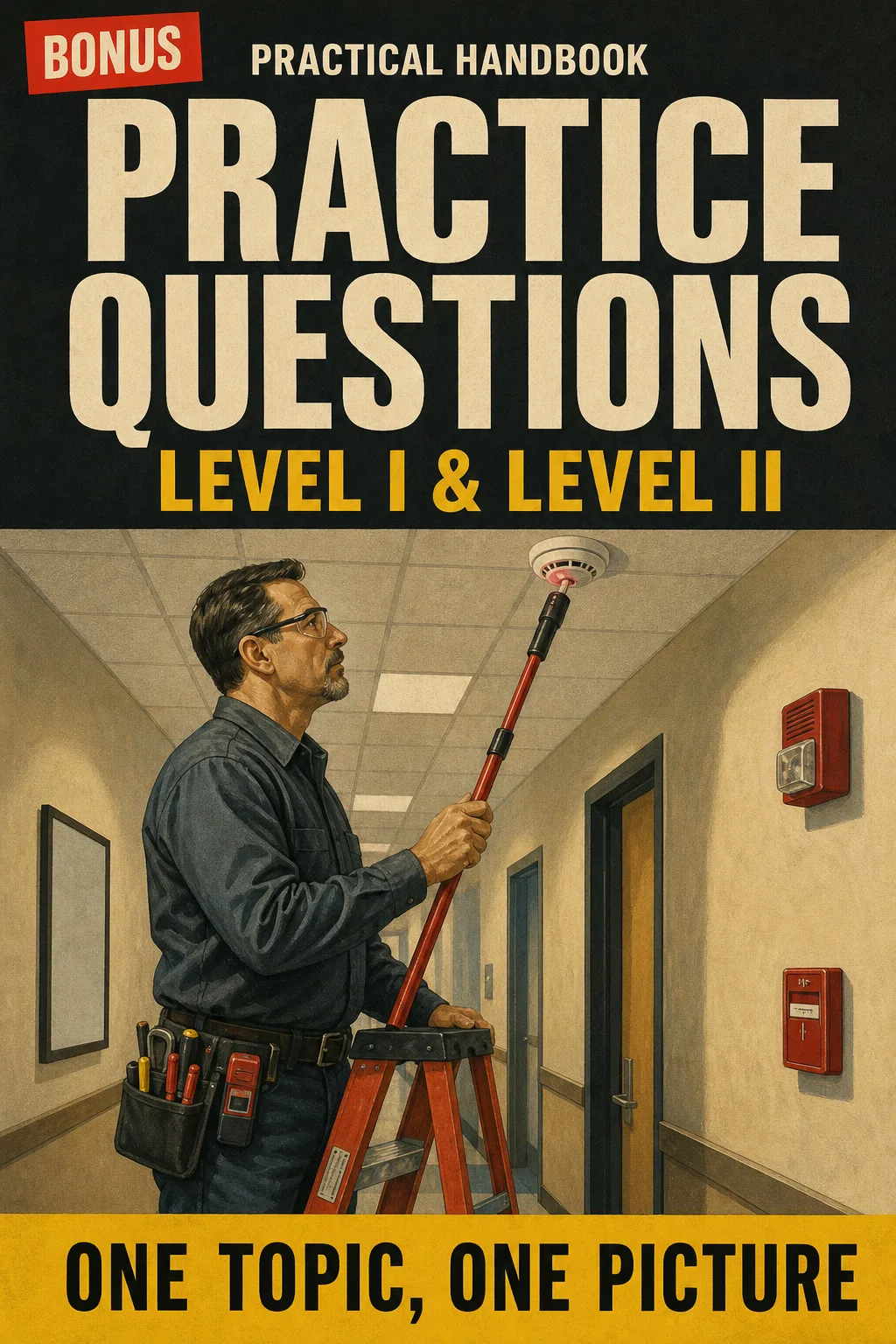
Practice Questions: Level I & Level II

BONUS 1: «Practice Questions: Level I & Level II»

Value on its own: US$ 17.90

Exam-style questions for both levels, each with an explanation of why the answer is right, so you learn the reason and not just the letter.

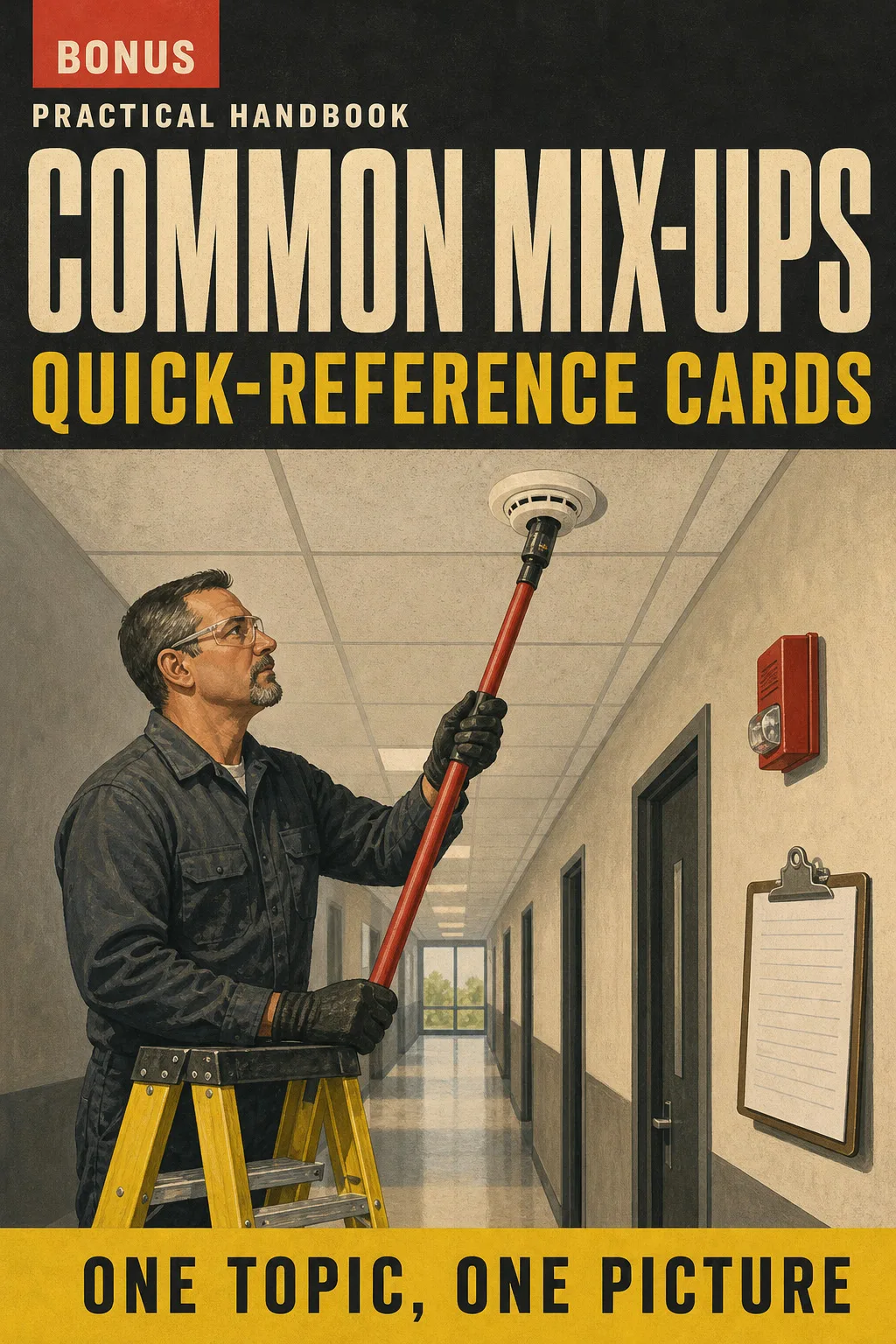
Common Mix-Ups: Quick-Reference Cards

BONUS 2: «Common Mix-Ups: Quick-Reference Cards»

Value on its own: US$ 14.90

The most common mix-ups (Class A vs. Class B, supervisory vs. trouble, IDC vs. SLC) on cards you can print and keep in the truck.

Fire Alarm Systems Illustrated with 2 Free Books

  • Fire Alarm Systems Illustrated: 68 illustrated pagesUS$ 63
  • BONUS 1: Practice Questions: Level I & Level IIUS$ 17.90
  • BONUS 2: Common Mix-Ups: Quick-Reference CardsUS$ 14.90
  • High-resolution PDF to printIncluded
Total value US$ 95.80
YOUR PRICE:
US$ 27
You save US$ 68.80
YES, I WANT FIRE ALARM SYSTEMS ILLUSTRATED FOR US$ 27

📄 This is a digital PDF book sent to your email: nothing is printed or shipped.

Secure purchaseEncrypted payment30-day guarantee

PDF by email: We email you Fire Alarm Systems Illustrated as a PDF, together with the two free books. It's a single payment: no installments, no extra charges.

Who This Book Is For

You're moving into fire alarm

You're moving into fire alarm

You know wiring, but NFPA 72 is new to you. The book starts with one riser diagram and builds the whole system from there, one page at a time.

Your NICET exam is coming up

Your NICET exam is coming up

Level I or Level II: the circuits, the signals and both calcs, always in the same order. Plus practice questions with the reason behind every answer.

You already work in fire alarm

You already work in fire alarm

You do it with your hands every day. Here you see it on paper, ready to print and keep in the truck.

Everything You Get Today

US$ 95.80US$ 27
YES, I WANT FIRE ALARM SYSTEMS ILLUSTRATED FOR US$ 27

📄 This is a digital PDF book sent to your email: nothing is printed or shipped.

30DAYS
GUARANTEE

30-Day Guarantee

Try Fire Alarm Systems Illustrated for 30 days, bonus books included.

We refund everything if the file won't open, if the book isn't what you see here, if you were charged twice or if the email doesn't arrive. Just email us.

You pay once. No subscriptions.

Frequently Asked Questions

Is it for me if I've done fire alarm work for years but freeze on written questions?

Yes. It covers Level I and Level II. The basics take one page each, and the Level II material is all there: the battery calc in three steps, voltage drop with a worked NAC, pathway classes and survivability, voice evacuation and testing frequencies. You see on paper what you already do on the job.

Where does the content come from?

From the NICET Fire Alarm Systems Level I and II content outlines (nicet.org), NFPA 72 (2022 edition) and NEC Article 760. Before you test, check NICET's current code reference list for the editions your exam uses. The rules are explained in our own words, and every topic reminds you that your AHJ may have additional requirements.

Is this official NICET material?

No. It's an independent study guide. It isn't published, endorsed or reviewed by NICET or NFPA, and it doesn't give you a certificate or continuing-education credit.

Does it replace a course or on-the-job training?

No. It's a study aid to use alongside your training, the code books and your field experience. NICET certification also requires verified work experience, which no book can give you.

Are the practice questions the real exam questions?

No. They're written for this book, in the style of the exam, each with an explanation of why the answer is right.

When and how do I get it?

The book and the 2 bonus books arrive as PDFs by email, at the address you enter at checkout.

Do I have to pay every month?

No. It's a one-time payment.

Can I get it on paper?

It's a PDF, nothing is shipped. You can print it at home or at a print shop: it's laid out to print cleanly, so you can keep it in a binder or in the truck.

How does the refund work?

You have 30 days. We refund everything if the file won't open, if the book isn't what you see on this page, if you were charged twice or if the email doesn't arrive: just email us.

Before You Close This Page

No more rereading the code with nothing sticking.

Class A and Class B, you see them drawn and you're done.

You walk into the exam knowing where everything is.

Drawings make studying faster.

The book is right below.

One-time payment: US$ 27 · Guarantee: 30 days · PDF by email

YES, I WANT FIRE ALARM SYSTEMS ILLUSTRATED FOR US$ 27

📄 This is a digital PDF book sent to your email: nothing is printed or shipped.